
Tangy Apple Cider Vinaigrette Dressing
This zesty apple cider vinaigrette stands out as an excellent choice for anyone who enjoys dressings with a bold, tangy profile. It incorporates a reduced amount of oil compared to vinegar, along with the sharp notes of garlic and mustard, creating a dressing that’s assertively flavorful. It’s perfect for tossing with bitter greens like raw kale or various chicories. Additionally, this dressing complements sweet elements beautifully, making it an ideal match for salads featuring dried fruits or fresh produce.
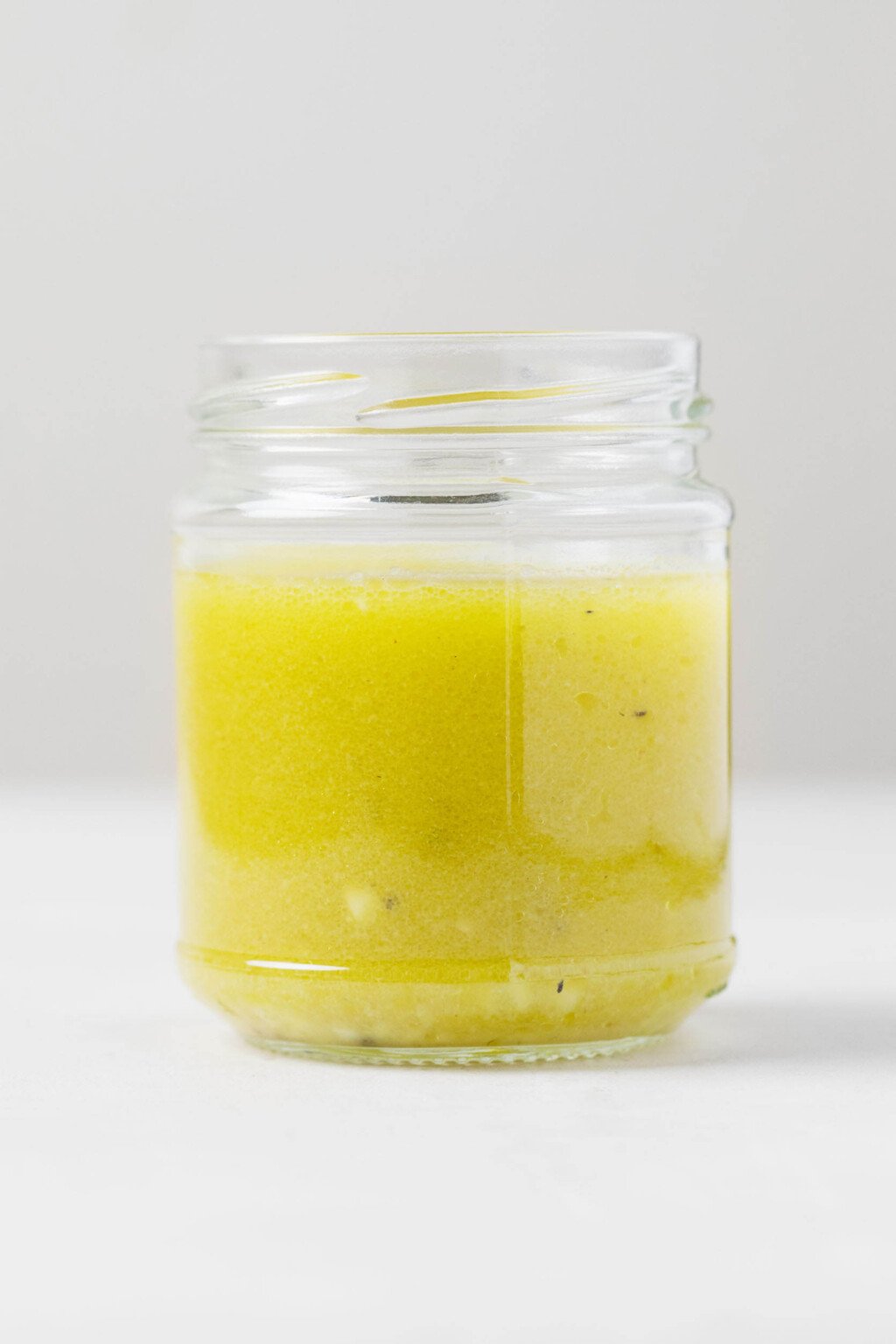
Homemade vinaigrette recipes are always welcome in the kitchen, and this version delivers exceptional intensity and vibrancy.
If you often find yourself reaching for an extra splash of vinegar or lemon juice after dressing your salad, this apple cider vinaigrette will likely become a staple for you.
Beyond its vibrant, tangy taste, this dressing is incredibly straightforward to prepare. It requires just five key ingredients, excluding salt and pepper, and comes together quickly with simple whisking or shaking.
Keep this recipe handy for salads made with bitter or strongly flavored greens, such as kale or chicories.
Let its lively acidity elevate roasted root vegetables or hearty, nutty whole grains that have been cooked.
This tangy dressing also excels at balancing sweetness. Try drizzling it over salads with sliced apples, raisins or dates, or even candied nuts for a delightful contrast.
A Quick Guide to Apple Cider Vinegar
Despite working in a compact kitchen, I maintain a diverse assortment of vinegars for creating homemade dressings, including champagne, red wine, and balsamic varieties.
Apple cider vinegar, commonly abbreviated as ACV, ranks among my most frequently used options. It’s versatile not only in vinaigrettes like this one but also in marinades and creamy dressings.
ACV offers a robust, sour flavor, with subtle hints of apple detectable upon tasting.
This vinegar is produced from fermented apple juice, where yeasts first transform the sugars into alcohol, followed by conversion into acetic acid.
During fermentation, beneficial yeasts and bacteria form, often appearing as a gelatinous “mother” or cloudy strands in the bottle.
These bacteria qualify as probiotics, the beneficial microbes present in many fermented foods.
Separating Fact from Fiction
Due to its probiotic content and widespread wellness trends, apple cider vinegar is often promoted as a tool for weight loss.
However, scientific evidence supporting these claims remains limited. Its acidity might slightly suppress appetite when consumed around meals.
Some small studies indicate it could modestly reduce blood sugar spikes after eating.
Nevertheless, these benefits are minor, and the supporting research lacks strength. ACV should not be considered a primary treatment for prediabetes or diabetes.
Moreover, its high acidity can erode tooth enamel and may worsen conditions like GERD or acid reflux.
In summary, apple cider vinegar shines as a culinary staple with probiotic benefits inherent to fermented foods, but it is not a miracle cure.
A Bold and Punchy Dressing
In most of my vinaigrette recipes, I stick to a standard 2:1 ratio of olive oil to acid.
This recipe deviates with a lower ratio: one-third cup olive oil to one-quarter cup ACV, yielding a distinctly acidic and slightly spicy dressing.
A generous teaspoon of Dijon mustard amplifies this zing.
Adjusting the oil-to-vinegar proportion allows you to customize the dressing’s intensity and boldness.
To temper the sharpness, I incorporate maple syrup, a common touch in my vinaigrettes for harmonious balance.
Here, I use a full tablespoon instead of my usual half or full teaspoon.
For savory depth, grate in one large or two small garlic cloves, adding an extra layer of pungency.
How to Prepare Apple Cider Vinaigrette
Making this apple cider vinaigrette is remarkably easy. Start by assembling these ingredients:
- Olive oil
- Apple cider vinegar
- Garlic
- Maple syrup
- Dijon mustard
- Salt
- Freshly ground black pepper
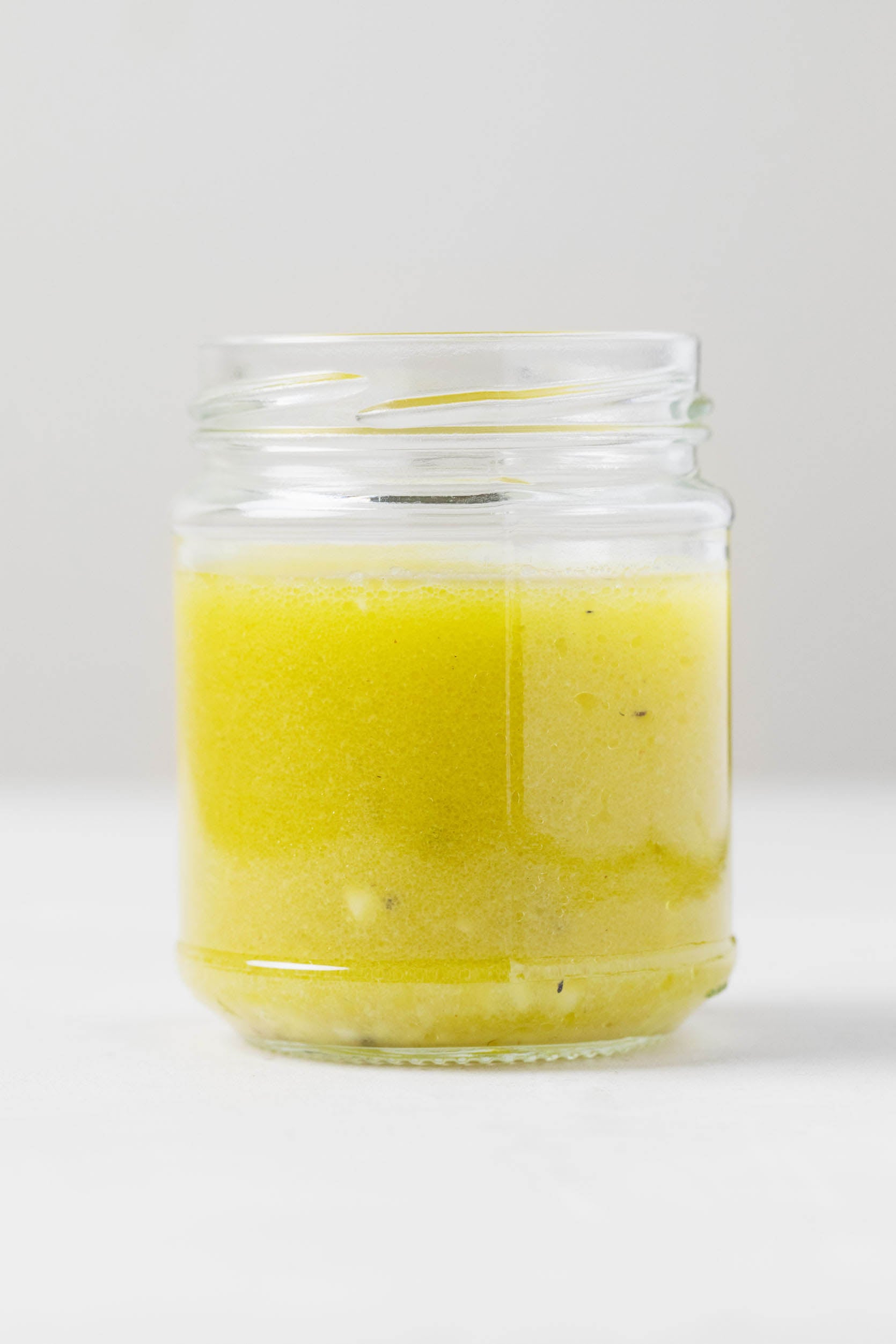
Combine them in a mason jar or glass measuring cup.
The dressing can be whisked right in the jar you’ll use for storage.
After thorough whisking or shaking, it achieves a smooth, uniform emulsion.
If starting in a measuring cup, transfer to an airtight container.
Store the vinaigrette covered in the refrigerator for up to one week.
Creative Ways to Use Apple Cider Vinaigrette
Beyond kale and bitter greens, this dressing pairs wonderfully with peppery arugula.
It enhances autumn-inspired dishes and flavors exceptionally well. I’ve used it in place of maple tahini dressing on harvest bowls and vegan autumn harvest salads.
The vinaigrette brings vibrancy to roasted sweet potatoes or butternut squash sheet pans, and mixes beautifully with roasted beets.
A simple yet transformative trick: stir a few tablespoons of salad dressing into cooked whole grains for instant flavor and seasoning.
Experiment with drizzling it over warm farro, brown rice, or quinoa.
Upcoming recipes, like a winter wheat berry salad, will showcase this versatile, zippy dressing perfectly.
Tangy Apple Cider Vinaigrette Dressing
Prep Time: 10 minutes
Total Time: 10 minutes
Yields: 8 servings
Ingredients
- 1/3 cup olive oil
- 1/4 cup apple cider vinegar
- 1 large or 2 small cloves garlic, finely minced or grated on a microplane
- 1 tablespoon maple syrup
- 1 teaspoon Dijon mustard
- 1/4 teaspoon fine salt (more to taste)
- Freshly ground black pepper to taste
Instructions
- Whisk all ingredients together in a liquid measuring cup, then pour into a jar or other airtight container for storage. Store the dressing in the fridge, covered, for up to 1 week.