
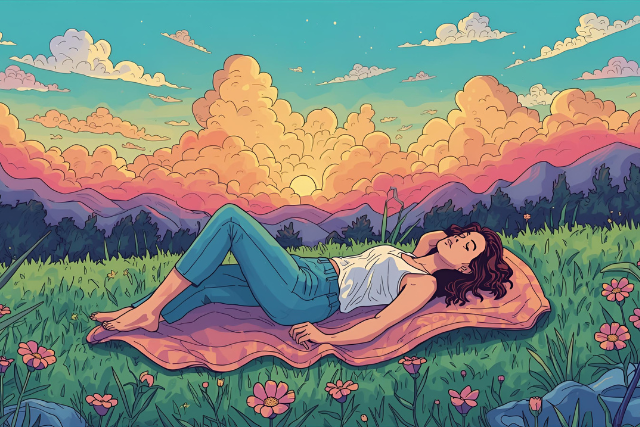
“Rest is not idleness, and to lie sometimes on the grass under trees on a summer’s day, listening to the murmur of water, or watching the clouds float across the sky, is by no means a waste of time.” ~John Lubbock
When Rest Feels Unsafe
For many years, I believed that exhaustion was a badge of honor, indicating that I had lived fully and given my all each day. I took pride in feeling drained, convinced that I had maximized every moment until nothing was left. Whenever tiredness crept in, I compelled myself to tackle just one additional task—and it was perpetually “just one more.” If the urge to lie down arose, I berated myself for weakness. Those around me appeared to power through endlessly: working late hours, agreeing to every demand, managing everything seamlessly, and completing all their responsibilities.
In response, I pushed even harder. I consumed more coffee, disregarded the throbbing in my chest, and promised myself rest would come “later” as a treat. Yet, when that deferred rest arrived, I was so utterly depleted and hollow that I settled for the simplest comfort food and collapsed in front of the television.
At a deeper level, my fatigue stemmed not merely from overdoing activities, but from embodying a version of myself I imagined others required. I poured out everything for them, leaving nothing for my own needs.
I was worn out from the habit of people-pleasing.
People-pleasing is frequently mistaken for mere kindness, yet it fundamentally serves as a survival mechanism. Experts in psychology term it the “fawn response.” When fighting or fleeing proves impossible, certain individuals adapt by placating others—consistently saying yes, remaining agreeable, and steering clear of conflict no matter the cost.
This approach may shield us in hazardous settings, but it gradually exacts a heavy price. The body remains in a hyper-vigilant mode, constantly assessing others’ requirements, tracking their vocal inflections, and poised to intervene and diffuse any tension.
In such a condition, the notion of rest seems unattainable.
Whenever I attempted to pause—to sit in stillness, recline, or even draw a leisurely breath—my body resisted fiercely. Tension hummed in my chest, my throat constricted, as if relaxation posed a threat. Idleness felt perilous, like it might provoke disapproval, rejection, or abandonment if I failed to prove my utility.
Thus, I kept moving. Externally, I projected competence, reliability, and goodness. Internally, I operated on mere vapors.
The Cost of Never Stopping
When rest feels threatening, chronic exhaustion becomes the norm.
The body deteriorates. A persistent stress knot formed in my shoulder, my posture worsened, and unrelenting fatigue set in.
The mind spirals. Anxiety intensified, murmuring that my efforts fell short.
The heart suffers. Constantly agreeing against my true desires bred resentment and emptiness.
I figured that greater discipline would solve it. However, discipline wasn’t the issue—my nervous system was dysregulated.
It had been conditioned long before to perceive slowdowns as risky. Consequently, it maintained my alertness, compelling me to strive, perform, and diminish my own presence—all under the guise of security, connection, approval, and acceptance.
Realizing Rest Is Part of Healing
The pivotal shift occurred when I delved into literature on trauma and the nervous system. I discovered that my exhaustion and unease weren’t signs of laziness or defectiveness; they were protective survival mechanisms. My body wasn’t opposing me—it was safeguarding me using the only methods it knew.
This insight melted a barrier within. For the first time, I viewed my weariness not as a shortcoming, but as testimony to the strenuous survival efforts I had endured.
If my body had been taught to interpret rest as peril, perhaps it could be retrained to embrace rest as security.
Gentle Practices for Making Rest Safer
Transformation didn’t happen instantly. Gradually, however, I started welcoming rest into my routine—not as slothfulness, but as essential remedy.
Here are several strategies that proved effective:
1. Start small.
Rather than aiming for a full-hour nap, I began with just five minutes of lying down. Sufficient to tune into my body, yet brief enough to sidestep alarm. Gradually, those intervals lengthened.
2. Anchor with touch.
When anxiety surfaced during rest attempts, I rested a hand on my chest or abdomen. This basic touch reassured me: I am present, I am secure.
3. Redefine rest.
I ceased equating rest solely with sleep. It could encompass sipping tea in quietude, gazing at the heavens, or absorbing gentle melodies. Essentially, any pursuit allowing my nervous system to unwind.
4. Challenge the story.
When my inner voice declared, “You’re wasting time,” I softly countered: Is it truly wasteful to nurture the body that sustains me? Bit by bit, I revised that narrative.
What I’ve Learned
Rest remains challenging at times. Occasionally, as I recline, the familiar buzz returns in my chest, prodding me to rise. Guilt may murmur that others accomplish more, implying I should match them.
Nevertheless, I now recognize: these sensations signal not life’s failure, but the gradual release of entrenched survival habits.
With continued practice, I increasingly perceive rest’s true essence:
- A method to recalibrate my nervous system.
- A means to respect my boundaries.
- A pathway to recover the life that people-pleasing had usurped.
I once thought safety derived from ceaseless action. Now, I understand safety initiates with cessation.
Closing Reflection
If you’ve ever shunned rest, convinced yourself relaxation was unaffordable, or experienced guilt upon attempting it, know you’re in good company. Countless individuals harbor nervous systems linking value to productivity and security to depletion.
But imagine if reality inverts this? What if rest constitutes healing rather than luxury? What if decelerating proves necessary rather than self-centered?
Rest might initially feel unnatural, even hazardous, evoking panic, urgency to resume activity, or fears of lagging. Yet, through tenderness, perseverance, and self-kindness, the body can rediscover a long-forgotten truth: pausing is safe.
Needing rest doesn’t render you feeble. It affirms your humanity. In a society glorifying perpetual motion, opting for rest may represent the utmost courage.